
About
I am a Research Scientist at FieldAI, where I work on dexterous manipulation for humanoid robots. I received my Ph.D. from Carnegie Mellon University, where I studied data-efficient robot learning for manipulation under Prof. Amir Barati Farimani.
My research focuses on machine learning for complex robotic manipulation, with an emphasis on learning efficiently from human demonstrations. I am interested in combining imitation learning, tactile sensing, teleoperation, and foundation models to build robust robotic control systems.
Publications
-
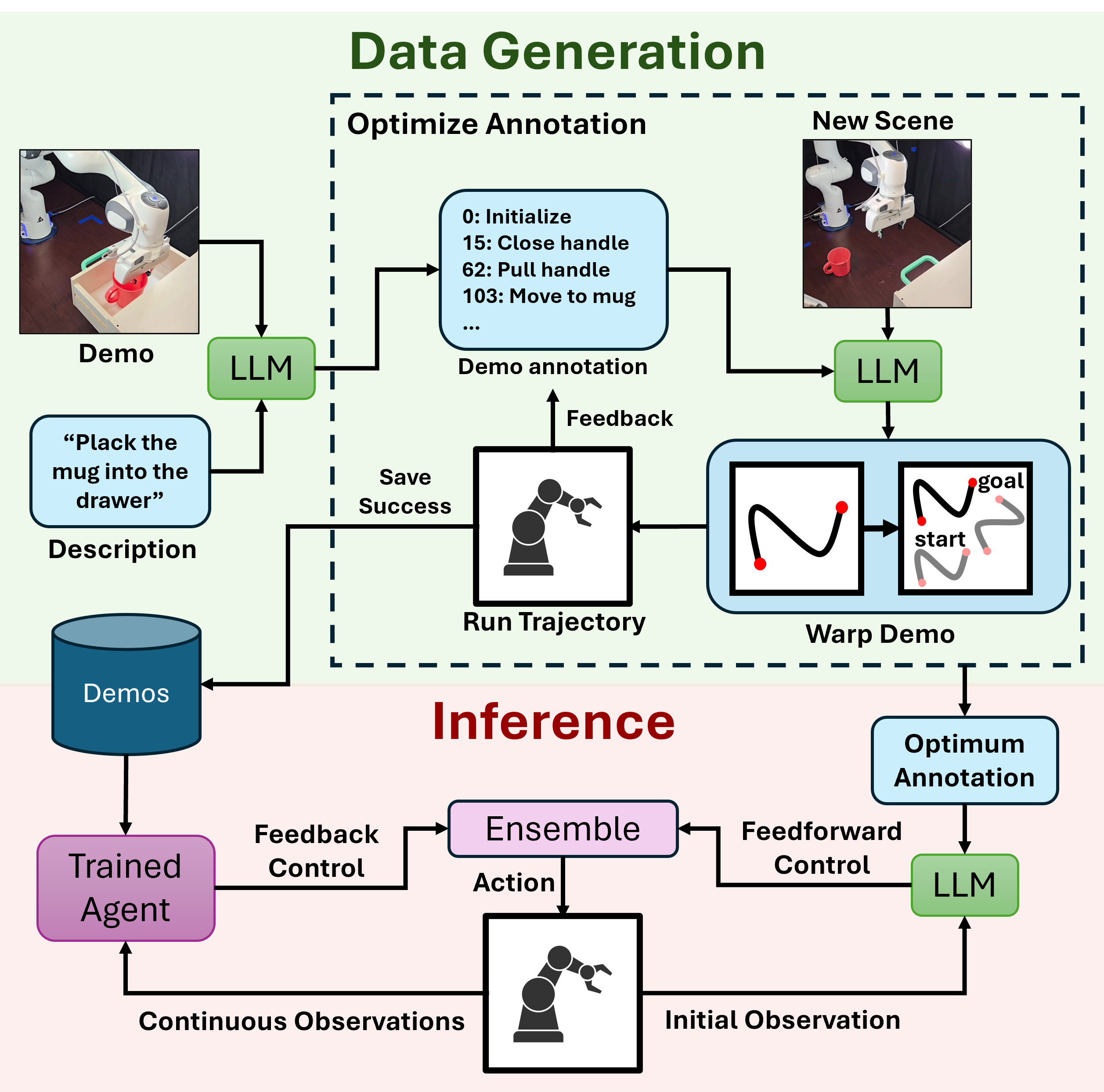 LLM Trainer: Automated Robotic Data Generating via Demonstration Augmentation using LLMsIEEE International Conference on Robotics and Automation (ICRA), 2026
Uses large language models to turn as few as one human demonstration into a large imitation learning dataset. The pipeline annotates keyframes, salient objects, and pose-object relations offline, retargets them to new scenes online, and warps the original demo into trajectories that are executed and saved when successful. Thompson sampling optimizes the reusable annotations to improve generation success, and we validate the approach on simulated tasks and a Franka Emika Panda.
-
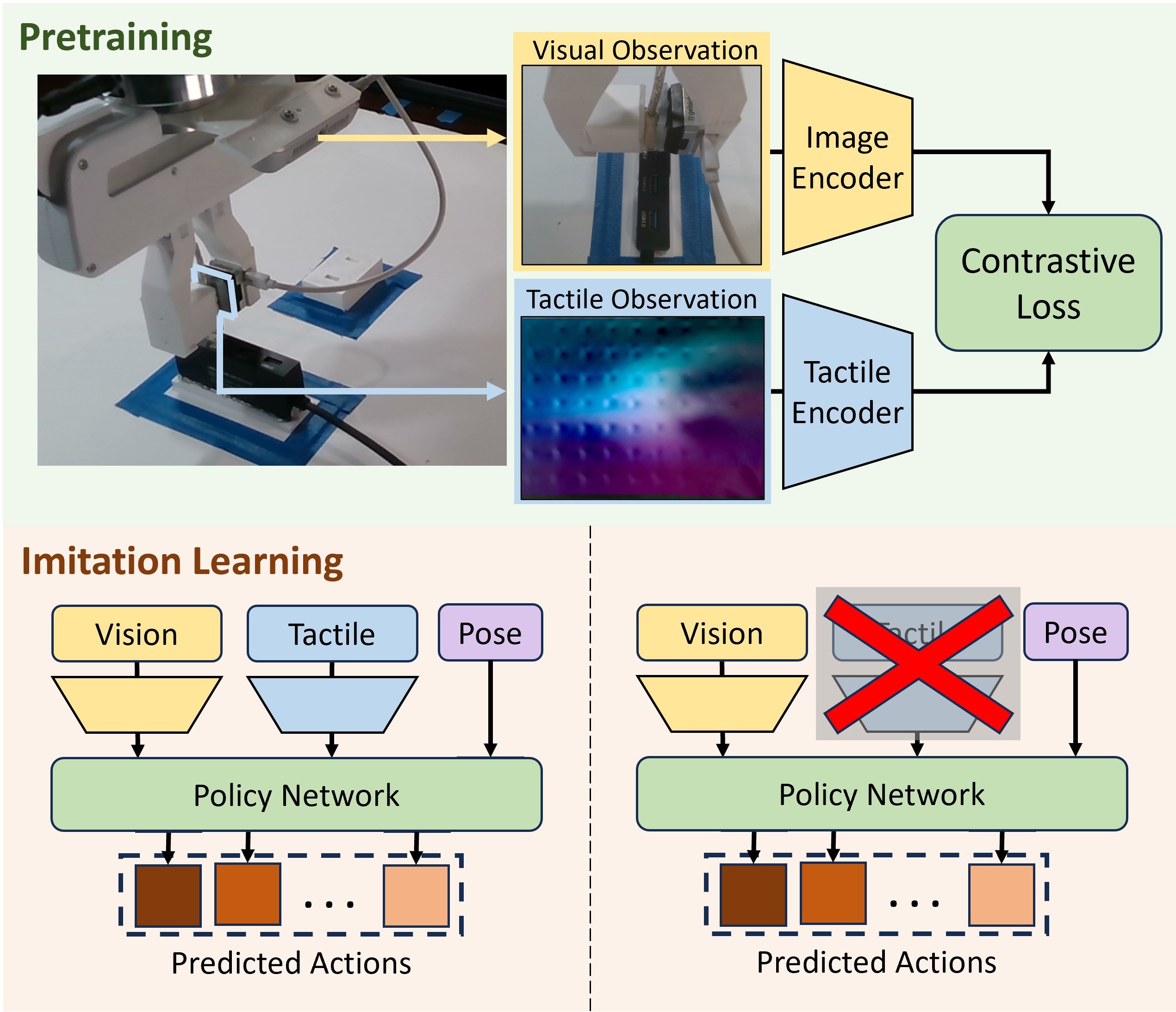 ViTaL Pretraining: Visuo-Tactile Pretraining for Tactile and Non-Tactile Manipulation PoliciesIEEE International Conference on Robotics and Automation (ICRA), 2025
Incorporates tactile sensing into imitation learning for USB cable plugging, a dexterous task that depends on fine-grained visuo-tactile servoing. We pretrain visual and tactile encoders with a contrastive loss so that a vision-only policy at deployment can reach performance on par with a visuo-tactile agent without using tactile sensors at inference.
-
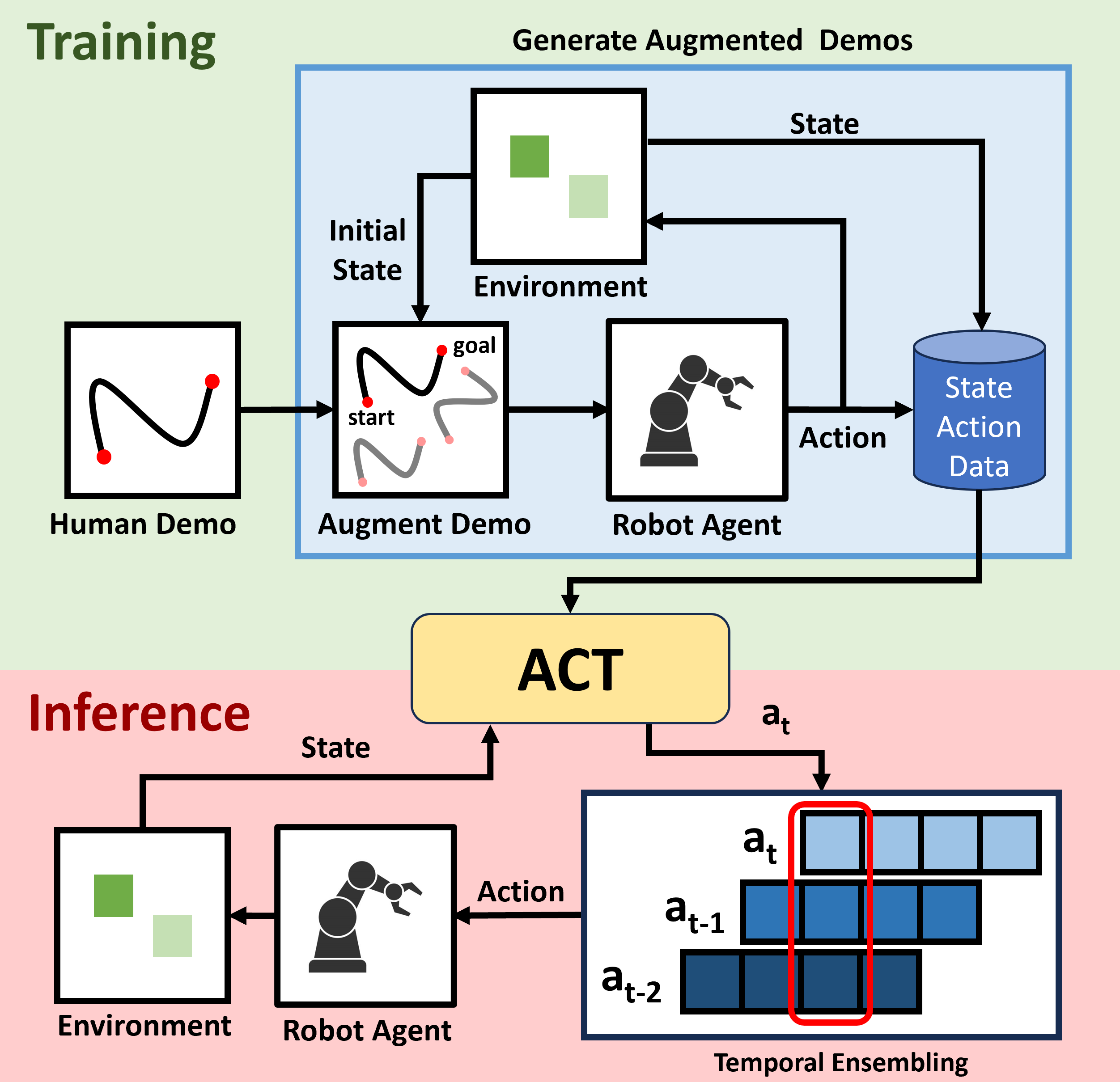 One ACT Play: Single Demonstration Behavior Cloning with Action Chunking TransformersarXiv preprint, 2023
Trains a behavior cloning agent from a single human demonstration by augmenting the trajectory with linear transforms to cover varied initial conditions. Built on Action Chunking Transformers, the method also adds temporal ensembling that uses the standard deviation of predicted actions to stay robust when the environment deviates from what the policy expects.
-
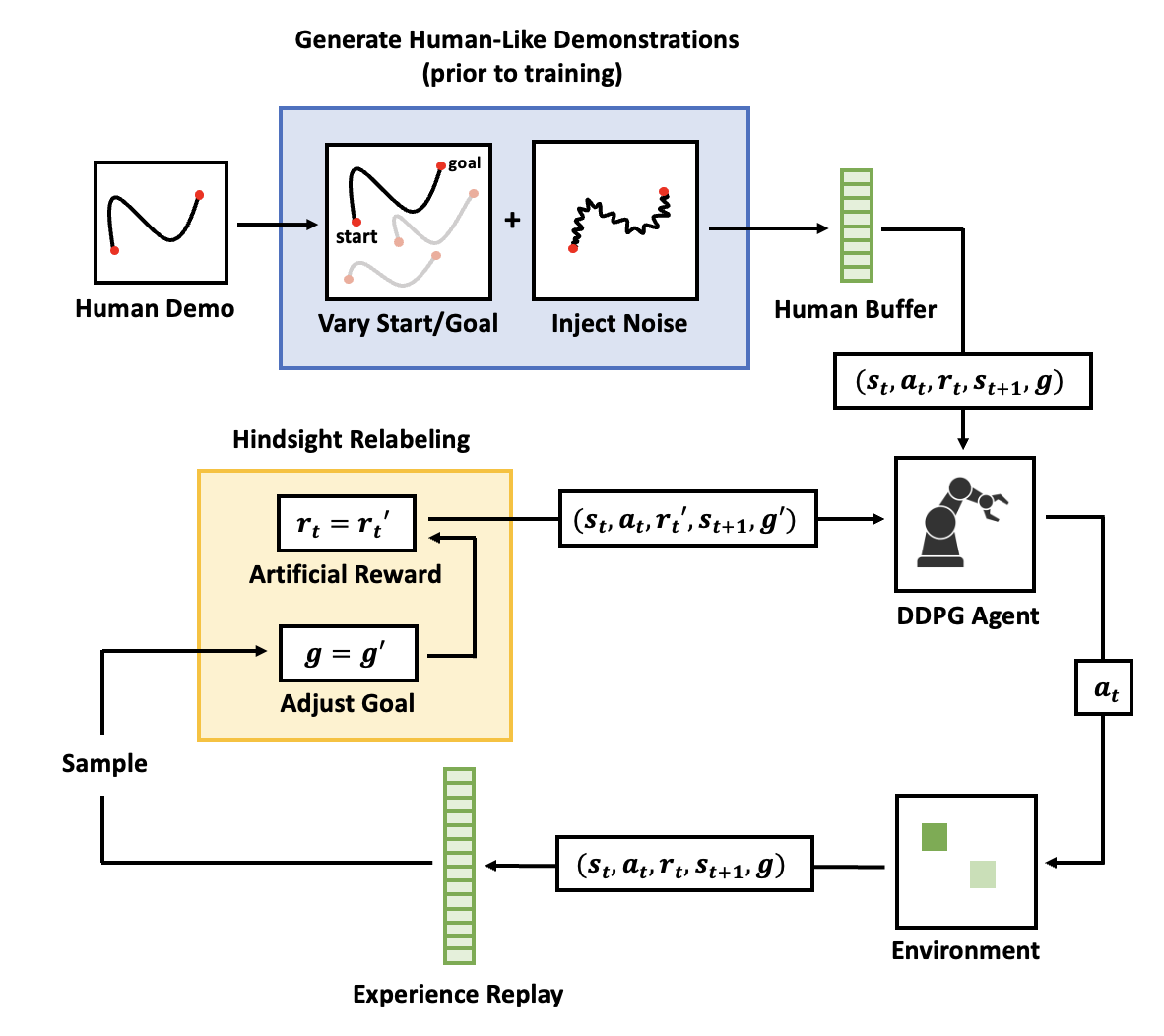 Minimizing Human Assistance: Augmenting a Single Demonstration for Deep Reinforcement LearningIEEE International Conference on Robotics and Automation (ICRA), 2023
Minimizes human teaching during reinforcement learning by augmenting a single VR demonstration into many human-like trajectories for DDPG with Hindsight Experience Replay. The approach speeds training on simple manipulation tasks, enables block stacking that baseline DDPG+HER cannot solve, and requires less than a minute of human input while still allowing policies that differ from the original demo.
-
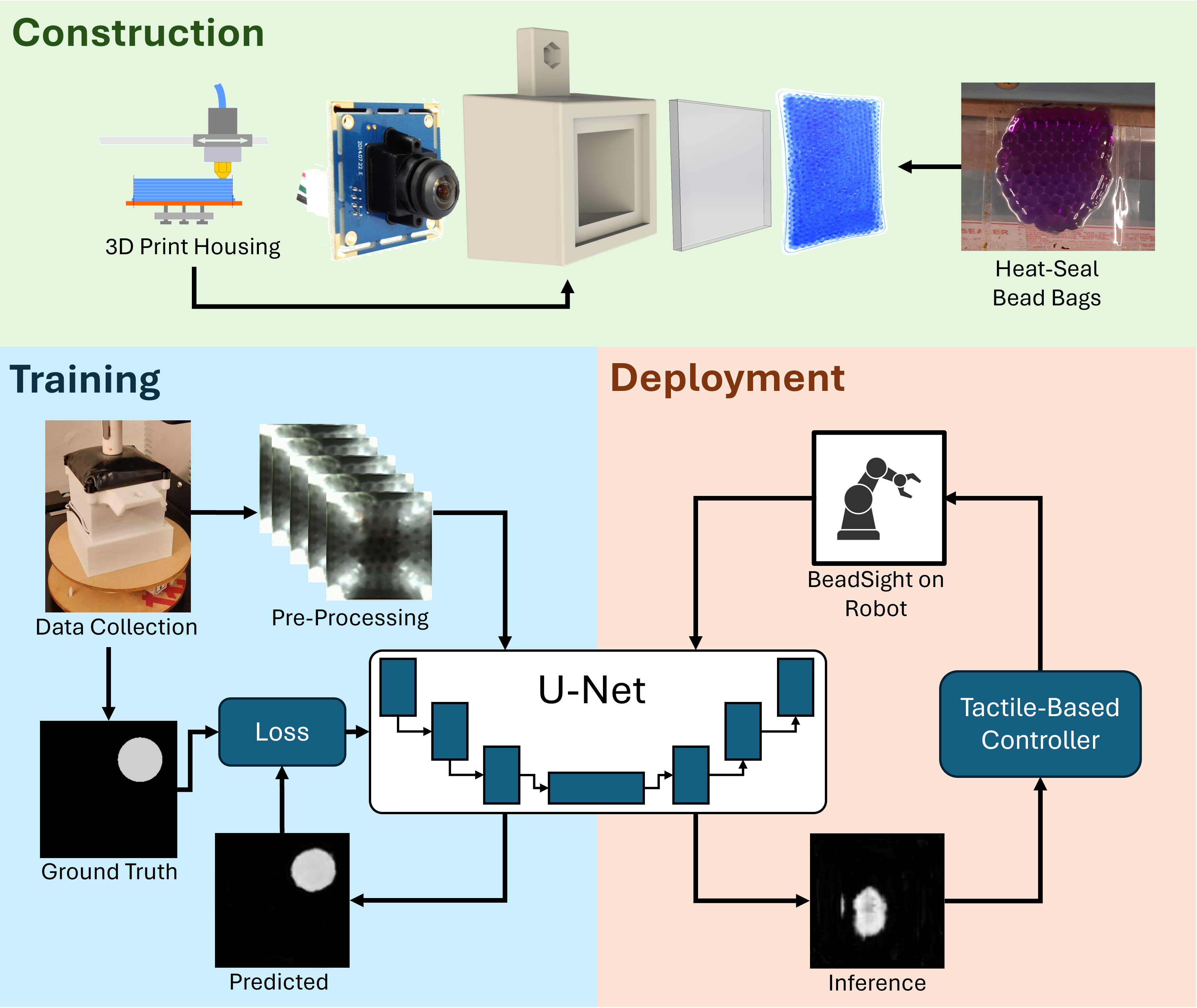 BeadSight: An Inexpensive Tactile Sensor Using Hydro-Gel BeadsIEEE Sensors Journal, 2024
Introduces an inexpensive, easily replaceable visuo-tactile sensor that encases hydro-gel beads in a vinyl bag. A rear camera observes bead deformation during contact, and a U-Net predicts the applied forces as a pressure map, offering a practical tactile option when cost and durability limit conventional sensors.
-
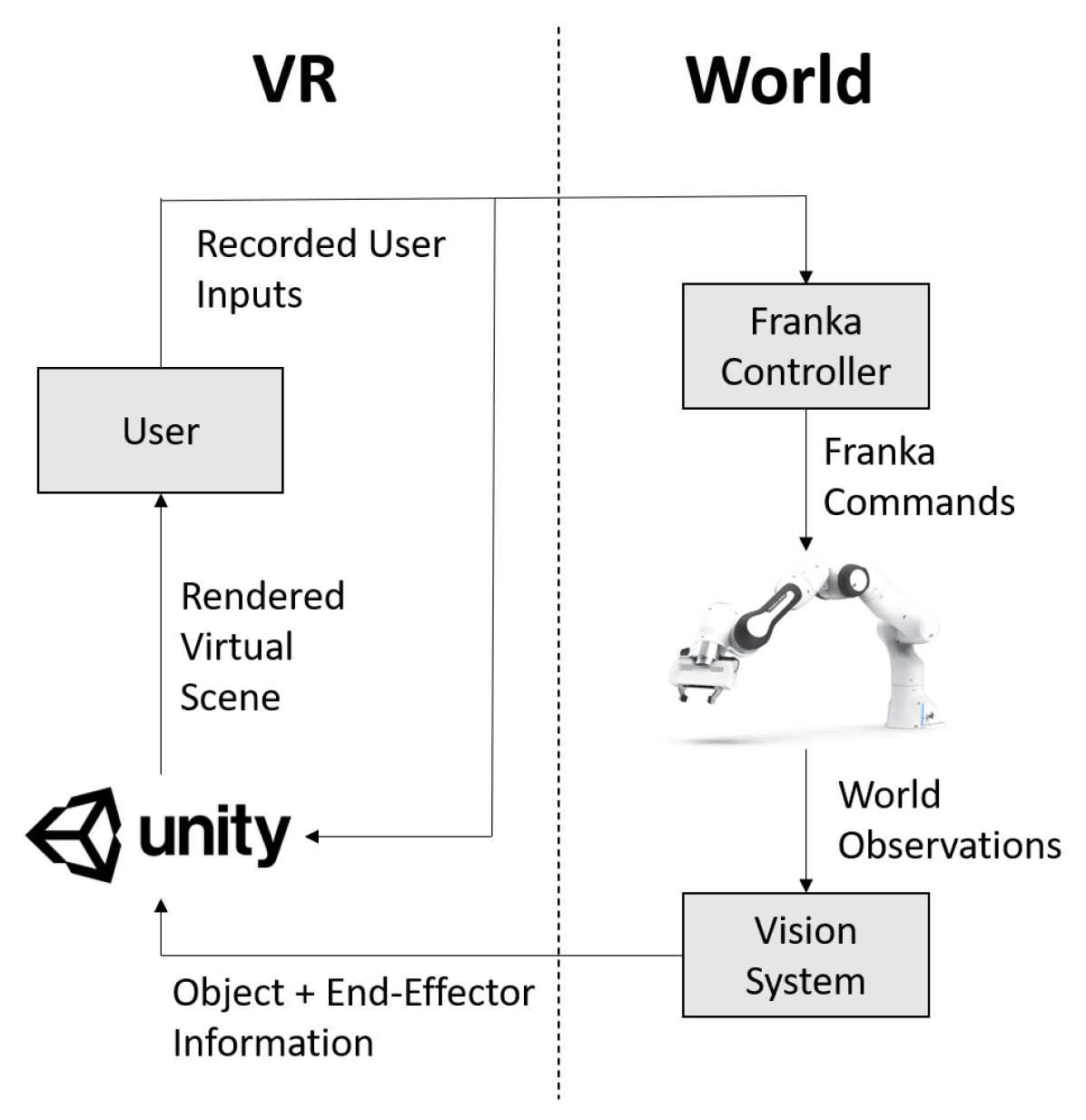 OpenVR: Teleoperation for ManipulationSoftwareX, 2025
Presents open-source VR teleoperation for a Franka Emika Panda using an Oculus headset and consumer hardware. The system is designed to be easy to use, easy to modify, and agnostic to experimental setup so researchers can collect demonstration trajectories more efficiently for imitation or reinforcement learning pipelines.
Collaborative
-
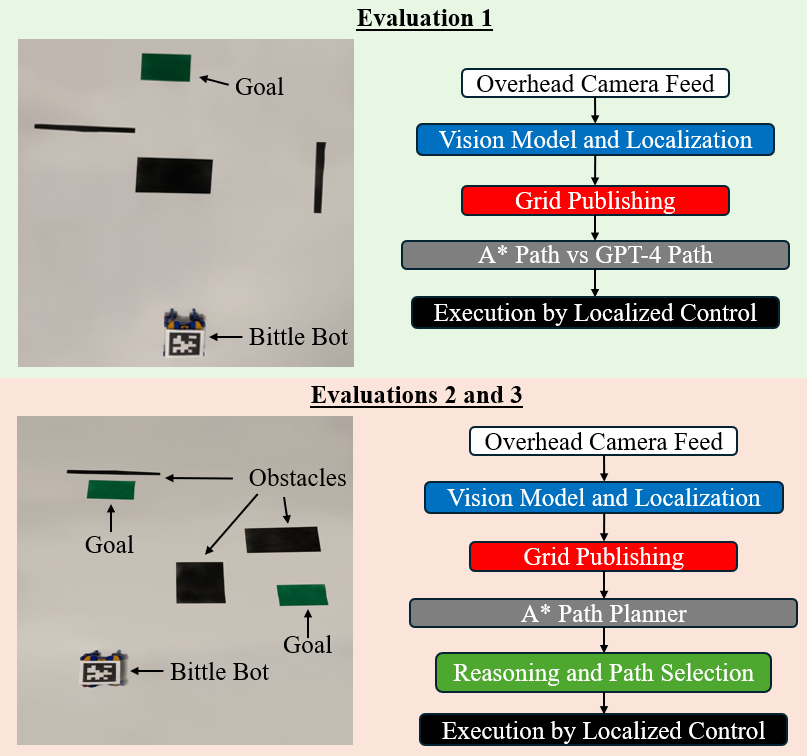 Semantic Intelligence: Integrating GPT-4 with A* Planning in Low-Cost RoboticsarXiv preprint, 2025
 -
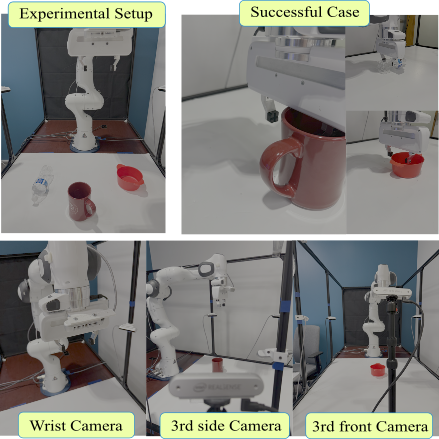 RT-Cache: Training-Free Retrieval for Real-Time ManipulationIEEE-RAS International Conference on Humanoid Robots (Humanoids), 2025
 -
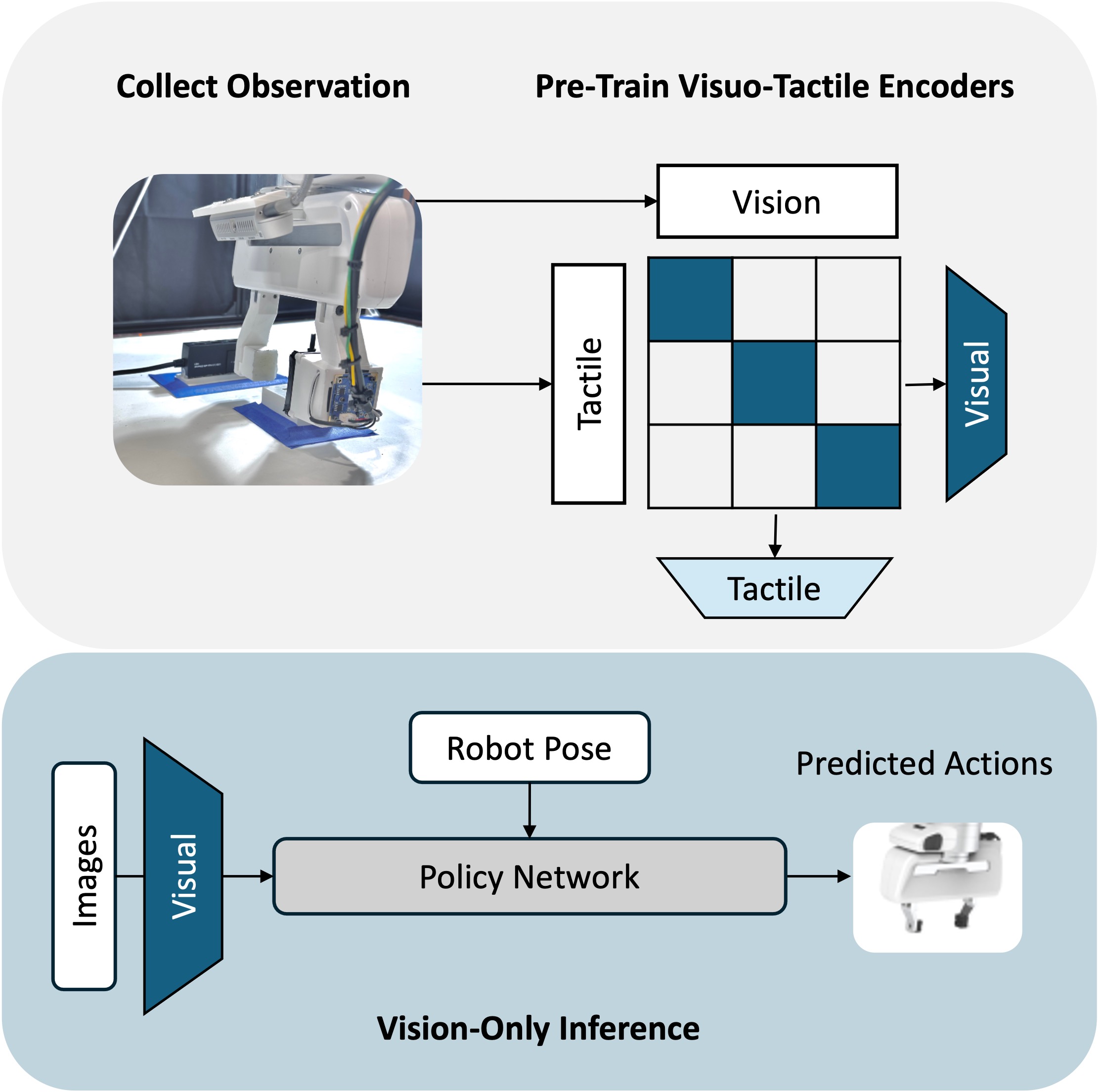 Low-Fidelity Visuo-Tactile Pre-Training Improves Vision-Only Manipulation PerformanceIEEE/RSJ International Conference on Intelligent Robots and Systems (IROS), 2025
 -
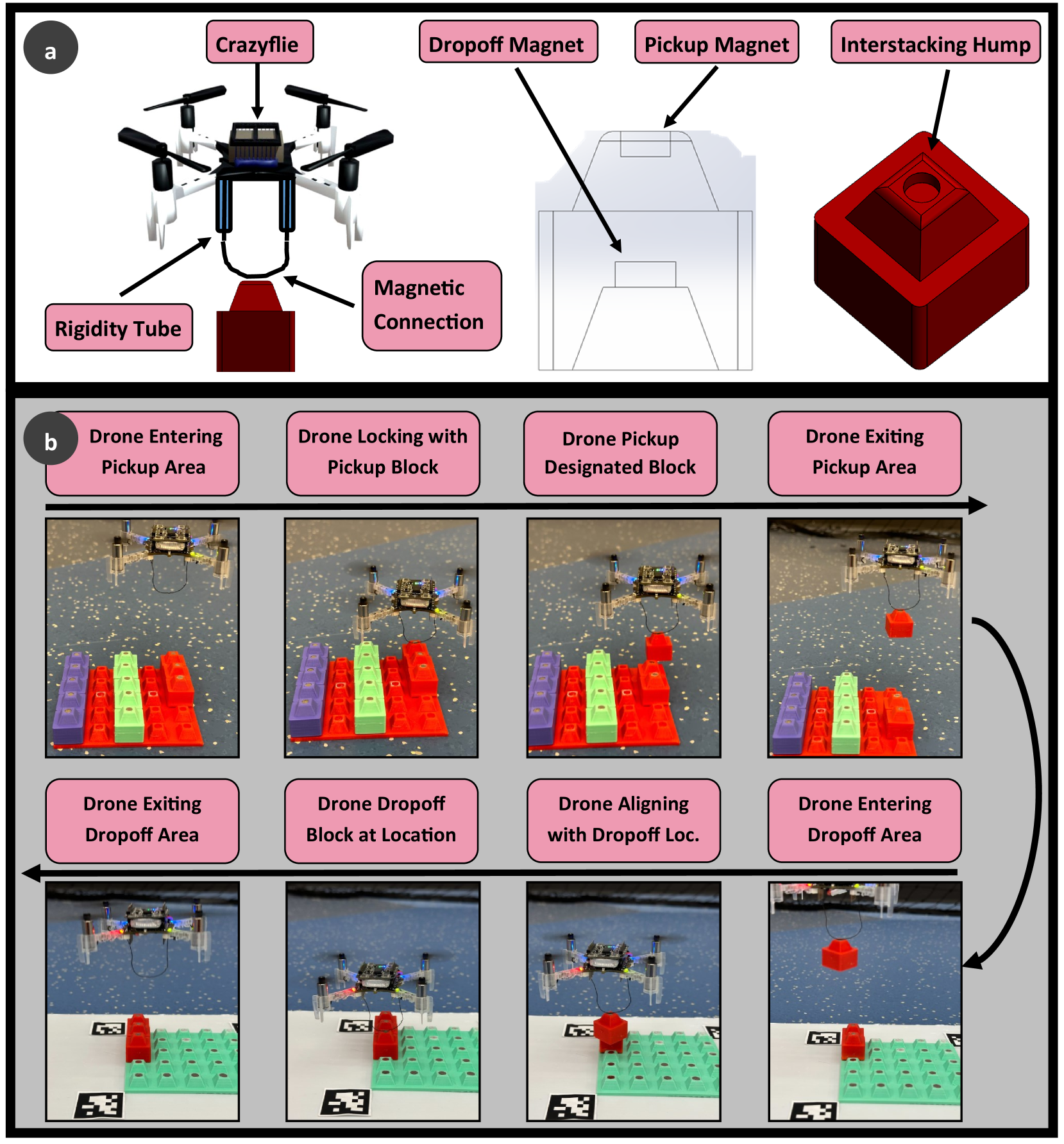 LLM-Drone: Aerial Additive Manufacturing with Drones Planned Using Large Language ModelsConstruction Robotics, 2025
 -
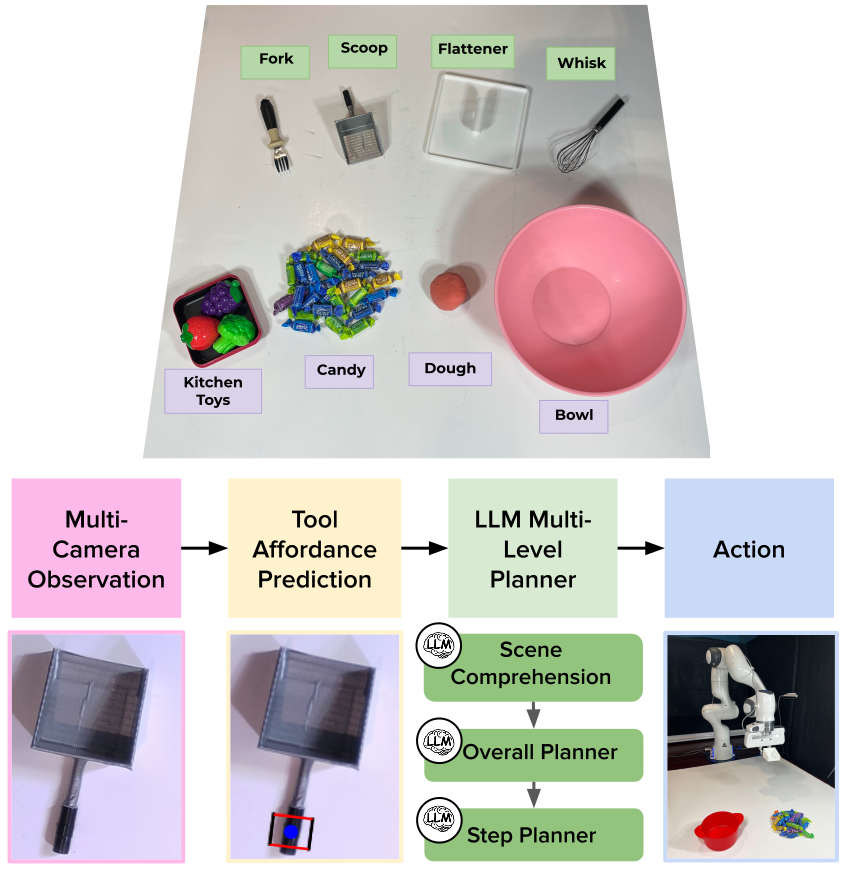
-
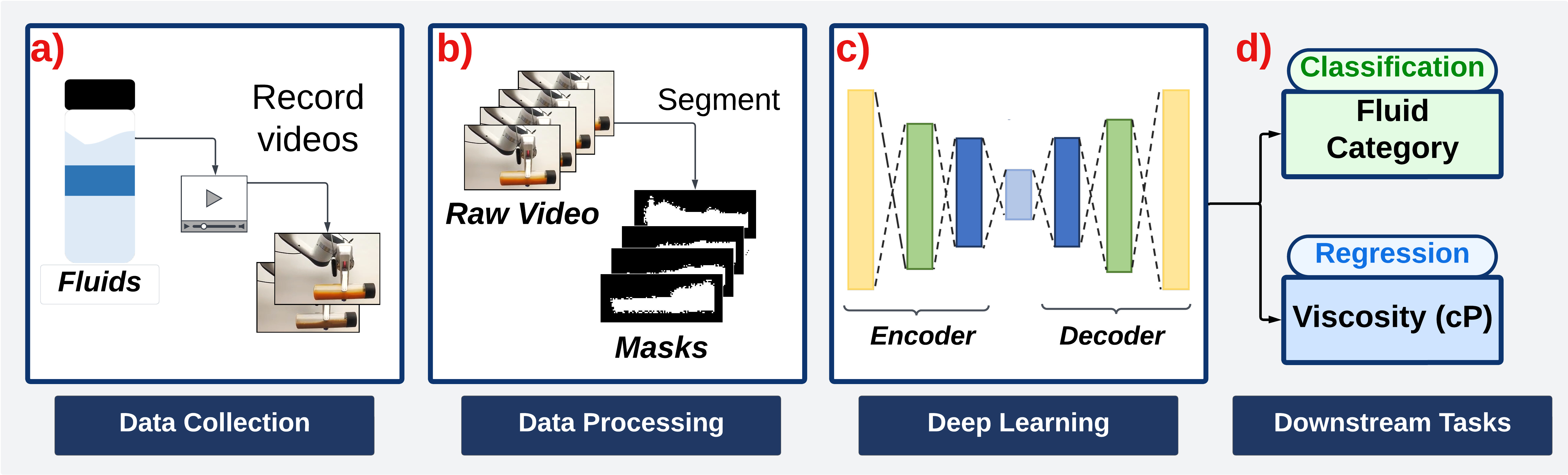
-
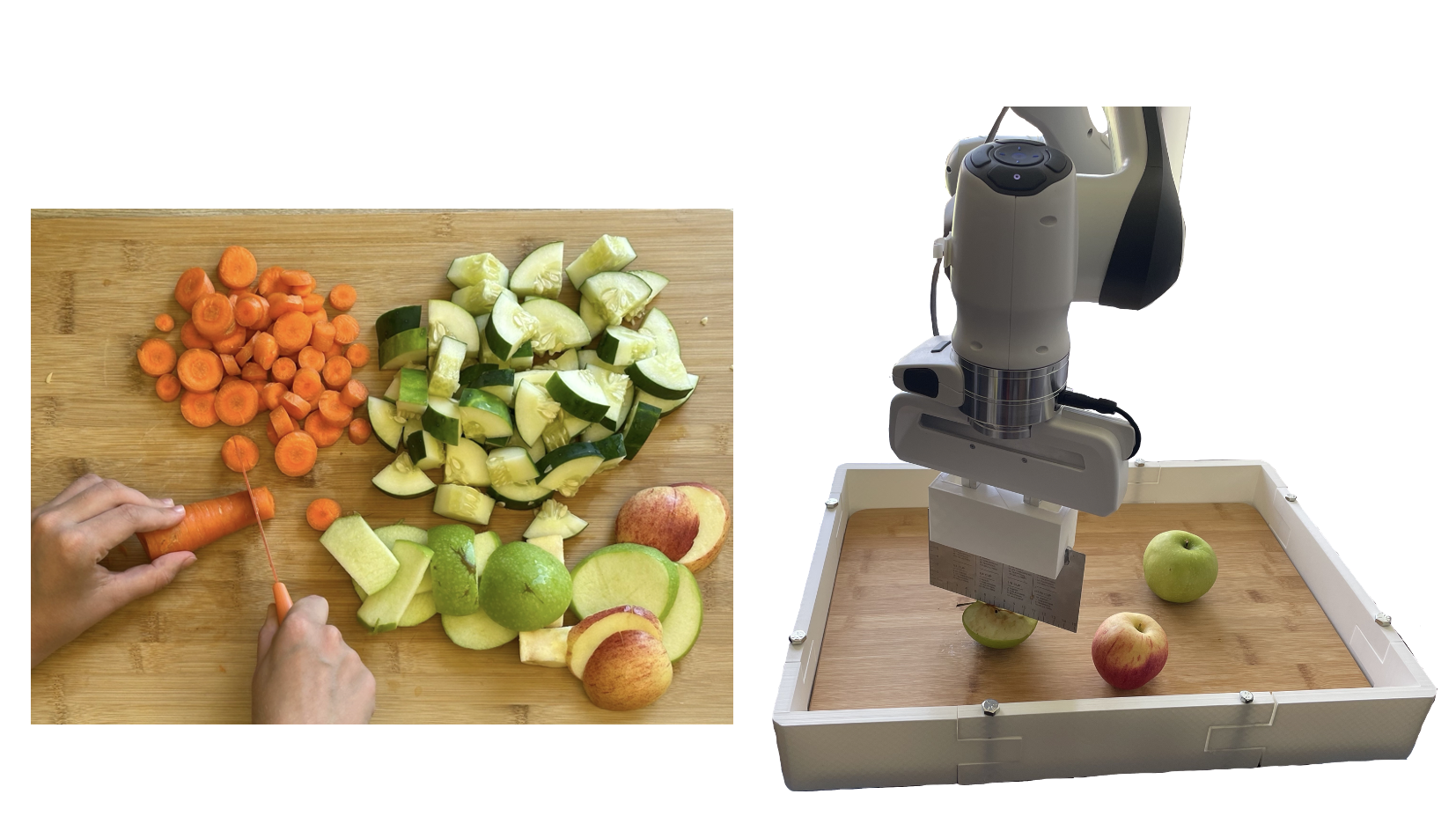 RoboChop: Autonomous Framework for Fruit and Vegetable Chopping Leveraging Foundational ModelsarXiv preprint, 2023
 -
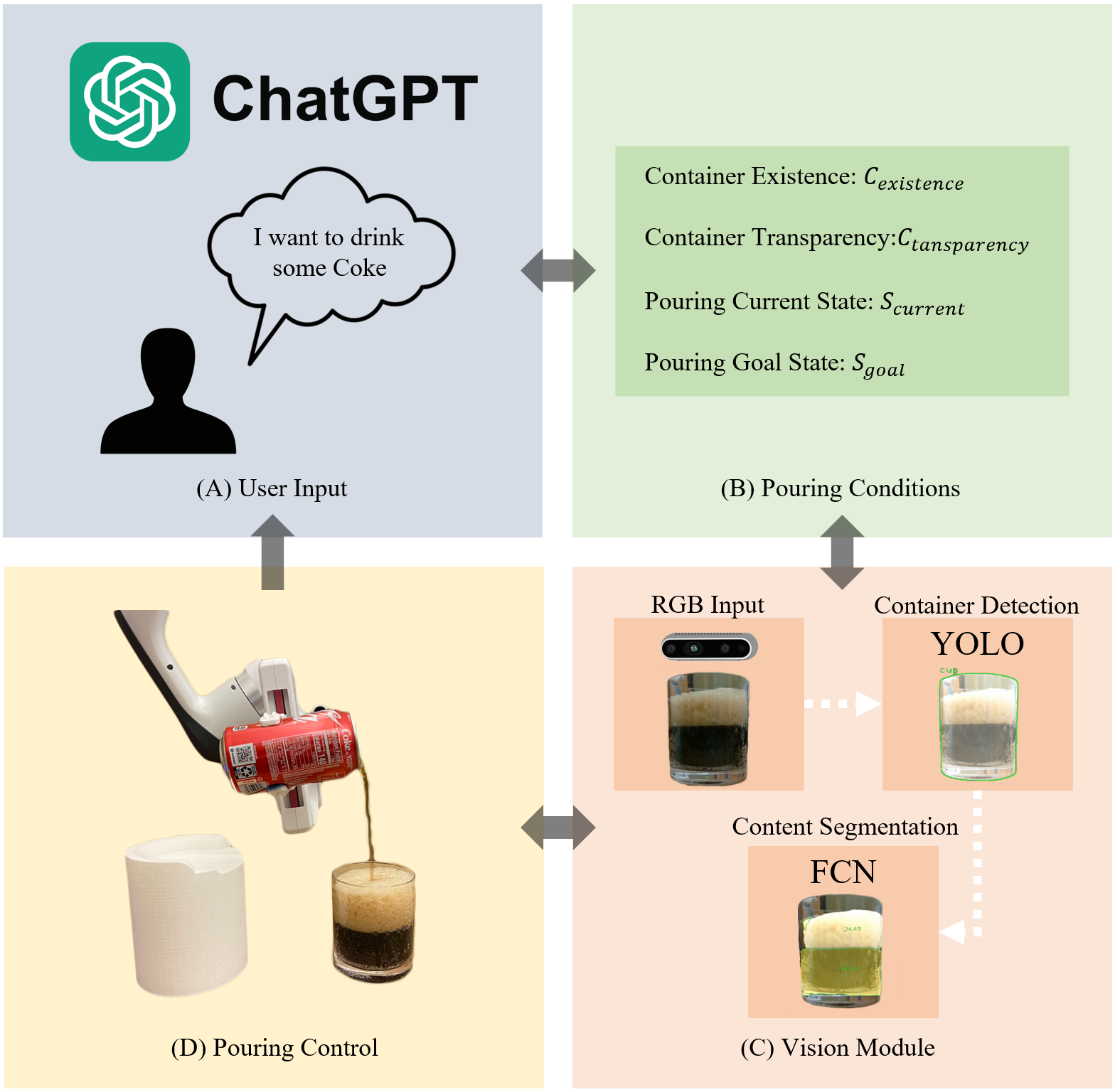 Pour Me a Drink: Robotic Precision Pouring Carbonated Beverages into Transparent ContainersarXiv preprint, 2023